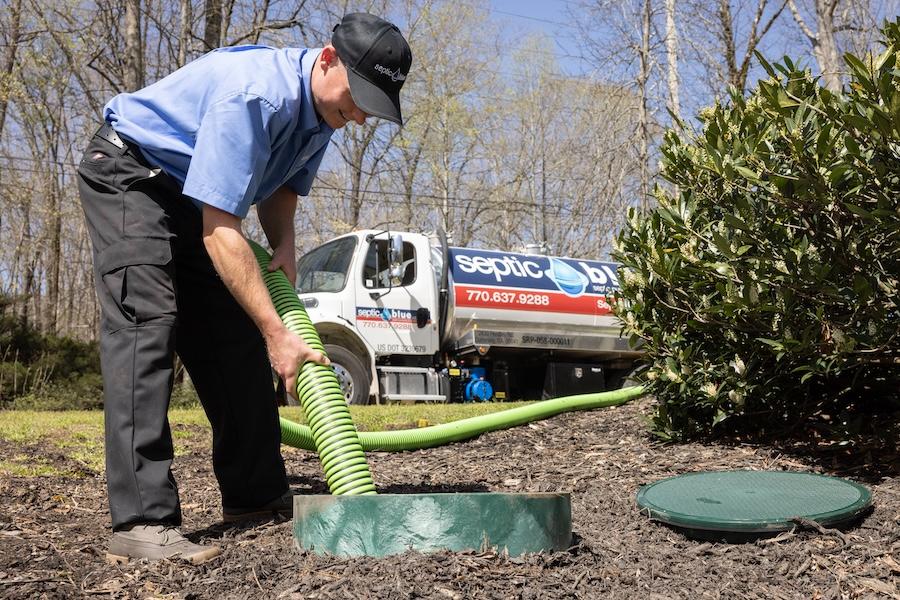
What is septic tank pumping?
Septic tank pumping is the removal of accumulated sludge and scum from your tank using a vacuum truck. Over time, solids settle and build up, reducing capacity and threatening your drain field. Regular pumping clears these layers so wastewater flows and treats properly, preventing costly backups and system failure.
Inside every septic tank, heavy solids sink to form a sludge layer while fats and oils float as scum. The liquid layer between them flows out to the drain field for final treatment.
When sludge and scum build too high, solids escape into the drain field and clog it. Pumping resets the tank, protecting the most expensive part of your system.
- Removes both the sludge and scum layers
- Protects your drain field from clogging
- Restores full tank capacity
- Prevents sewage backups into your home
How often should you pump your septic tank?
Most septic tanks should be pumped every three to five years. The exact interval depends on household size, tank capacity, and water usage. A smaller tank serving a large family needs pumping more often, while a larger tank with fewer people can go longer between services. The table below offers general guidance.
These are industry-standard estimates. Heavy water use, garbage disposals, and more occupants shorten the interval. When in doubt, call us for an inspection.
Apex Septic serves Freeland, Bridgeport, Vassar, Gladwin and surrounding central-Michigan communities and can help you set a schedule that fits your home.
| Household Size | Tank Capacity | Typical Pumping Interval |
|---|---|---|
| 1-2 people | 1,000 gallons | Every 4-5 years |
| 3-4 people | 1,000-1,250 gallons | Every 3-4 years |
| 5-6 people | 1,250-1,500 gallons | Every 2-3 years |
| 7+ people | 1,500 gallons | Every 1-2 years |
What are the signs your septic tank is overdue?
Watch for slow drains, gurgling pipes, foul odors inside or outside, sewage backups, pooling water or unusually lush grass over the drain field. These warning signs mean your tank is likely full and solids may be escaping. Call Apex Septic at (989) 205-6017 right away to avoid a failure.
Ignoring these symptoms can lead to drain field damage that is far more expensive than routine pumping.
If you notice any of these, we offer 24/7 emergency pumping across the Great Lakes Bay Region.
- Slow-draining sinks, tubs, and toilets
- Gurgling sounds in your plumbing
- Sewage odors indoors or near the tank
- Wastewater backing up into drains
- Pooling water or soggy soil over the drain field
- Bright green, lush grass above the septic system
What does the pumping process involve?
Our technician locates and uncovers the tank lid, inspects the sludge and scum levels, then uses a vacuum truck to remove all contents. The process typically takes 20 to 60 minutes. We check baffles and tank condition, then dispose of waste at an approved facility in an environmentally responsible manner.
We work cleanly and efficiently, leaving your access points secured and your yard as we found it.
Every job follows Michigan licensing standards and responsible disposal practices.
- Locate and expose the tank access lid
- Measure sludge and scum layers
- Vacuum out all solids and liquid
- Inspect baffles, walls, and overall condition
- Dispose of waste at a licensed facility
What is included with Apex Septic pumping service?
Every pumping visit includes complete removal of tank contents, a basic inspection of your tank and baffles, and environmentally responsible disposal. We provide clear, upfront pricing with no hidden fees, so you know what to expect before we start. Licensed, insured technicians handle every job to the highest standard.
If we spot a developing problem, such as a failing baffle or an overloaded drain field, we will explain it plainly and recommend next steps.
Our goal is apex-quality service that keeps your system running for years.
- Full pump-out of sludge and scum
- Visual inspection of tank and baffles
- Environmentally responsible waste disposal
- Honest, upfront pricing with no hidden fees
- Fully licensed and insured service
Frequently Asked Questions
How long does septic tank pumping take?
What happens if I never pump my septic tank?
Can I pump my septic tank myself?
How do I know what size my septic tank is?
Do I need to be home during pumping?
Will pumping fix a slow drain or backup?
Do you offer emergency septic pumping?
Trusted Septic Resources
Homeowner guidance from authoritative sources on septic system care, maintenance, and Michigan regulations: