When do you need a new septic system?
You need installation or replacement when building new, when an old system fails, or when inspections reveal failed drain fields, cracked tanks, or chronic backups. Warning signs include sewage backups, pooling water or lush grass over the field, persistent odors, and slow drains that pumping no longer fixes.
Most systems last 20 to 40 years with proper care, but soil saturation, root intrusion, and undersized tanks eventually force replacement. If repairs keep recurring, a new system is usually the smarter long-term investment.
We evaluate your current setup honestly and recommend replacement only when it genuinely makes sense for your Mid-Michigan property.
- New home construction or major additions
- Failed or saturated drain field
- Cracked, collapsed, or undersized tank
- Repeated backups despite regular pumping
- Property sale requiring a compliant system
What permits and testing does Michigan require?
Michigan requires a county health-department permit before any septic installation or replacement. The process includes a soil evaluation and a percolation (perc) test to confirm your ground can absorb effluent, plus site review for setbacks from wells, water, and property lines. Apex Septic manages this process for you.
Local health departments in Saginaw, Midland, Bay, and surrounding counties set the rules under Michigan's sanitary code. Each permit is specific to your soil type, lot size, and water table.
We coordinate the paperwork, testing, and required inspections so your project stays compliant from first dig to final sign-off.
How does the perc test and soil evaluation work?
A perc test measures how quickly water drains through your soil, which determines the type and size of drain field you need. A soil evaluation checks soil composition and seasonal water-table depth. Together they confirm whether a conventional or alternative system is appropriate for your site.
Fast-draining sandy soils usually allow conventional gravity systems. Heavy clay or high water tables often require mound or engineered alternatives that still meet code.
These tests protect groundwater and ensure your system functions for decades. We schedule and interpret them as part of the installation process.
What septic system types do you install?
We install conventional gravity systems, pressure-dose and pump systems, mound systems for high water tables, and engineered or alternative systems where soils demand them. The right choice depends on your perc results, lot size, water-table depth, and household load.
Conventional systems are the most common and cost-effective where soils drain well. Mound and engineered systems add treatment or elevation when standard designs will not pass.
Apex Septic matches the system to your site and budget, never overselling. We explain the options clearly before any work begins.
| System Type | Best Fit |
|---|---|
| Conventional gravity | Well-draining soil, adequate lot size |
| Pressure-dose / pump | Sloped lots or distant drain fields |
| Mound system | High water table or shallow bedrock |
| Engineered / alternative | Poor soils where standard systems fail perc |
What is the installation process start to finish?
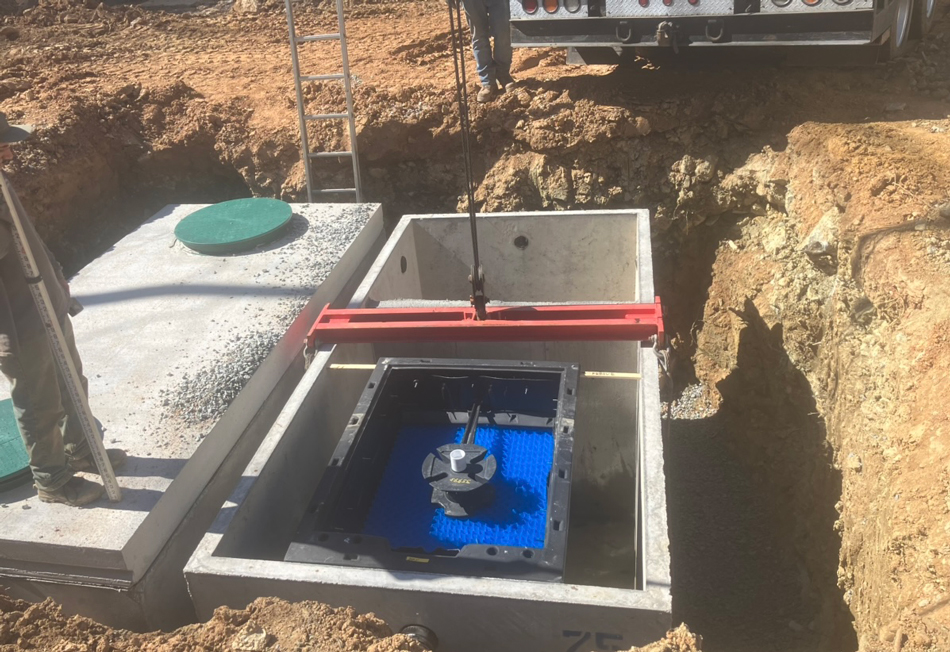
Installation follows a clear sequence: site evaluation and perc testing, permit application, system design, excavation, tank and drain-field placement, backfill and grading, then a final health-department inspection before the system goes into service. Most residential installs take a few days once permits are approved.
We handle excavation with our own equipment, set the tank level and sealed, lay the drain field to spec, and restore the site when finished.
You get one accountable team from permit to inspection, with upfront pricing and no hidden fees along the way.
- Site evaluation, soil and perc testing
- Permit application and system design
- Excavation and tank placement
- Drain-field installation to code
- Backfill, grading, and site cleanup
- Final inspection and system startup
How big should my new septic tank be?
Tank size is based on the number of bedrooms and expected daily flow. Most residential homes use a 1,000 to 1,500 gallon tank, with larger households requiring more capacity. Michigan code sets minimum sizing, and your installer confirms the correct size during design.
Undersizing causes frequent pumping and early drain-field failure, while proper sizing gives solids time to settle and protects the field.
We size every system to your household and local code so it performs reliably for years.
| Home Size | Typical Minimum Tank |
|---|---|
| 1-2 bedrooms | 1,000 gallons |
| 3 bedrooms | 1,000-1,250 gallons |
| 4 bedrooms | 1,250-1,500 gallons |
| 5+ bedrooms | 1,500+ gallons |
Frequently Asked Questions
Do I need a permit to replace my septic system?
How long does septic installation take?
Can I install a septic system myself in Michigan?
What happens if my soil fails the perc test?
How much does a new septic system cost?
Do you serve my area in the Great Lakes Bay Region?
How long will a new septic system last?
Trusted Septic Resources
Homeowner guidance from authoritative sources on septic system care, maintenance, and Michigan regulations: