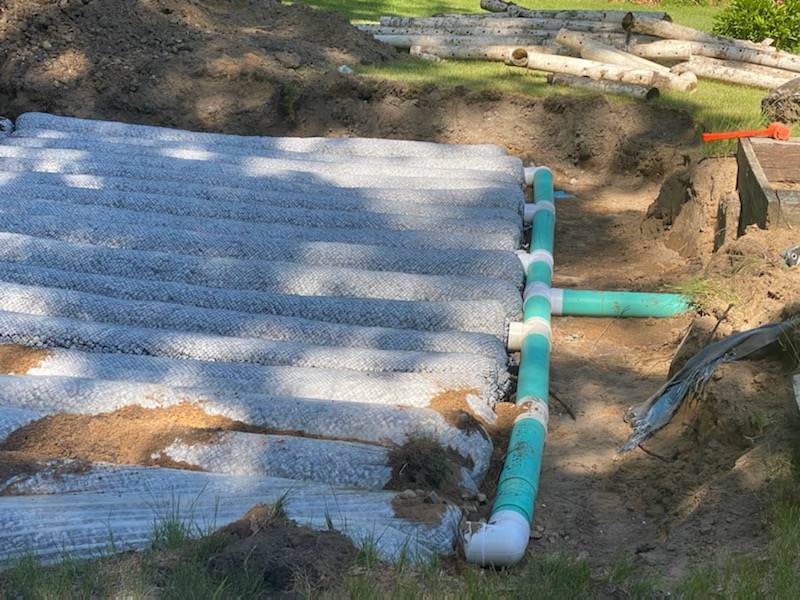
What does a septic drain field do?
A drain field, or leach field, is the final stage of your septic system. Liquid effluent from the tank flows into buried perforated pipes, disperses across gravel trenches, and filters down through the soil, where natural bacteria treat it before it reaches groundwater.
Once solids settle in your septic tank, the remaining liquid moves out to the drain field. There, it slowly percolates through soil that acts as a natural filter, removing harmful bacteria and nutrients.
A healthy drain field is essential to the whole system. If it clogs or saturates, wastewater has nowhere to go, backing up toward your tank and home.
- Receives liquid effluent from the septic tank
- Distributes it through perforated pipes in gravel trenches
- Filters wastewater naturally through surrounding soil
- Protects groundwater and your property from contamination
What are the warning signs of a failing drain field?
The clearest signs are pooling water or soggy ground over the field, strong sewage odors outdoors, and slow or gurgling drains inside. Unusually lush, green grass over the drain field is another common clue that effluent is surfacing instead of filtering properly.
Drain field problems often start quietly, then escalate fast. Catching them early can mean the difference between simple maintenance and a full replacement.
If you notice any of these symptoms around your Mid-Michigan property, call Apex Septic right away at (989) 205-6017 for a prompt inspection.
- Standing water or wet, spongy soil above the field
- Foul sewage odors in the yard
- Slow drains or gurgling toilets throughout the home
- Bright green, fast-growing grass over the drain field
- Sewage backing up into sinks, tubs, or the lowest drains
Why do drain fields fail?
Most drain fields fail from overuse, lack of tank pumping, or soil that has become clogged with solids and biomat. Excess water, grease, non-biodegradable items, and heavy traffic over the field all shorten its lifespan and reduce the soil's ability to absorb effluent.
When a septic tank isn't pumped on schedule, solids carry over into the drain field and clog the soil pores. Over time, a dense biomat layer forms that water can no longer pass through.
Hydraulic overload, too much water entering the system at once, is another frequent cause, especially from leaking fixtures or redirected rainwater.
- Skipping regular tank pumping (every 3 to 5 years)
- Flushing grease, wipes, or non-biodegradable items
- Overloading the system with excess water
- Driving or parking heavy equipment over the field
- Tree and shrub roots invading the pipes
How do you maintain a drain field?
Protect your drain field by pumping the septic tank every 3 to 5 years, conserving water, and keeping the area clear of traffic, roots, and runoff. Routine inspections catch small issues before they turn into costly failures, extending the life of your entire system.
Good maintenance starts at the tank. Keeping solids out of the drain field is the single best thing you can do to preserve it.
Apex Septic offers scheduled pumping, inspections, and drain field service throughout Freeland, Bridgeport, Vassar, Gladwin, and the wider region.
- Pump the septic tank on a regular 3 to 5 year schedule
- Spread out laundry and heavy water use
- Fix leaking faucets, toilets, and fixtures promptly
- Redirect gutters and surface water away from the field
- Keep the field clear of vehicles, structures, and deep-rooted plants
Drain field dos and don'ts
Do keep the drain field dry, planted with grass, and free of heavy loads. Don't park on it, flush harmful items, or plant trees nearby. Small daily habits determine whether your field lasts for decades or fails prematurely.
Use this quick reference to protect your investment. When in doubt, call Apex Septic for guidance tailored to your system.
| Do | Don't |
|---|---|
| Pump your tank every 3 to 5 years | Wait until you see backups or pooling |
| Plant grass over the field | Plant trees or shrubs near the pipes |
| Divert rain and sump water away | Let gutters or runoff flood the field |
| Spread out water-heavy chores | Overload the system in a single day |
| Keep the area open and accessible | Drive, park, or build over the field |
| Flush only waste and toilet paper | Flush grease, wipes, or chemicals |
Can a failing drain field be repaired or restored?
Often, yes. Early-stage problems caused by clogging or overload can sometimes be restored by pumping, resting the field, and clearing lines. Severe or long-neglected failures may require repair or partial replacement. An on-site inspection determines the right fix for your situation.
Apex Septic always starts with a thorough diagnosis. We identify the true cause, whether it's a saturated field, clogged lines, or a failing tank, before recommending the most cost-effective solution.
Our pricing is clear, honest, and upfront, with no hidden fees. When replacement is unavoidable, our licensed crews handle excavation and installation to the highest standard.
Why choose Apex Septic for drain field service?
Apex Septic is fully licensed and insured in Michigan, offers 24/7 emergency service, and uses environmentally responsible disposal. We serve Saginaw, Midland, Bay City, and the entire Great Lakes Bay Region with top-tier workmanship and straightforward, upfront pricing.
Drain field issues rarely wait for business hours. Our team responds around the clock to protect your home and property.
From inspection to repair to full replacement, we treat every system with the precision that defines apex-level service.
- Fully licensed and insured in Michigan
- 24/7 emergency response across Mid-Michigan
- Environmentally responsible waste disposal
- Clear, honest, upfront pricing, no hidden fees
Frequently Asked Questions
How long does a septic drain field last?
What is the most common cause of drain field failure?
Can I drive or park on my drain field?
How do I know if my drain field is failing?
Does a drain field need to be pumped?
What plants are safe to grow over a drain field?
Do you offer emergency drain field service?
Trusted Septic Resources
Homeowner guidance from authoritative sources on septic system care, maintenance, and Michigan regulations: